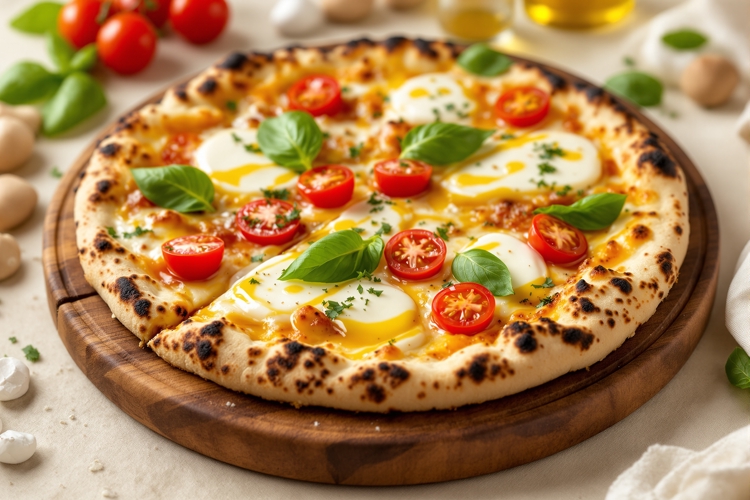
Missing pizza is the number one reason people fall off keto. This crispy cauliflower crust fixes that — all the cheesy comfort, no flour anywhere in sight — and the recipe card above shows exactly what the crust counts and what it does not.
Key Takeaways
- About 3g net carbs per slice from the crust alone
- The squeeze step is what makes it crispy
- Ready in about 35 minutes
- Freezes well for quick weeknight meals
Why Cauliflower Crust Works
Cauliflower is neutral in flavor and low in carbs, so it takes on whatever you season it with. Combined with cheese and egg, it bakes into a sturdy base that holds toppings just like a real crust.
The secret is removing as much water as possible. A wet crust steams instead of crisping, and that is the single most common mistake people make.
Ingredients You'll Need
Everything here is keto-friendly and easy to find.
- 1 large head cauliflower (or 4 cups riced cauliflower)
- 1 large egg
- 1 cup shredded mozzarella
- 1/4 cup grated parmesan
- 1 tsp dried oregano, 1/2 tsp garlic powder
- Salt, pepper, and your favorite sugar-free toppings
Step-by-Step Instructions
Preheat your oven to 425°F and line a baking sheet with parchment paper. Rice the cauliflower, then microwave it for 5 minutes until soft.
Let it cool, wrap it in a clean towel, and squeeze out every drop of water you can. Mix the dry cauliflower with egg, cheeses, and seasonings, then press it into a 10-inch round.
Bake for 15 minutes until golden. Add sauce and toppings, then bake another 10 minutes until the cheese is bubbling.
Getting a Crispy Crust Every Time
If your crust comes out soggy, one of these is almost always the culprit.
- Squeeze the cauliflower twice — really wring it out
- Pre-bake the crust before adding toppings
- Use low-moisture mozzarella, not fresh
- Avoid watery toppings like fresh tomatoes
Nutrition and Macros Per Serving
A single serving — one-eighth of a 10-inch pizza — counts about 3g of net carbs for the crust itself, and the cheese and egg are where nearly all of that comes from. Sauce and toppings are deliberately left out of that figure, because a supermarket pizza sauce and a homemade one are not the same food. A regular wheat-flour slice can pack 30g or more of carbohydrate, so the swap still holds — just read your sauce label rather than assuming.
The exact numbers shift with your toppings. Pile on pepperoni, olives, mushrooms, and extra mozzarella for more fat and protein without adding meaningful carbs. Just keep an eye on tomato sauce and go light on onions or bell peppers if you are watching your carb total closely.
Keto-Friendly Topping Ideas
The crust is only half the story. Build your pizza with toppings that keep you in ketosis while delivering real flavor, and you will not miss the bread at all.
- Meats: pepperoni, crumbled sausage, shredded rotisserie chicken, prosciutto
- Cheese: extra mozzarella, goat cheese, feta, or a sprinkle of parmesan
- Veggies: mushrooms, spinach, olives, roasted red peppers, fresh basil
- Finishing touches: a drizzle of olive oil, arugula, or chili flakes

Sponsored
Create your own custom Mediterranean diet plan
Answer a few quick questions and get a personalized meal plan built around your goals — free quiz, no account needed.
Take the Quiz NowHow to Get a Truly Crispy Crust
Almost every disappointing cauliflower crust fails for the same reason: too much water. Cauliflower is roughly 92 percent water, and if that moisture stays in the mixture, the crust steams from the inside and turns soft and floppy no matter how long you bake it. Removing the water is not a suggestion — it is the entire difference between a crust you can hold and one that collapses under its own toppings.
After ricing and cooking the cauliflower, let it cool enough to handle, then wrap it in a clean kitchen towel or cheesecloth and squeeze hard. Realistically, you should wring out close to a cup of liquid. If you want extra insurance, spread the squeezed cauliflower on a baking sheet and dry it in a low oven for ten minutes before mixing. Then par-bake the crust on its own before adding any sauce or cheese, which gives the base a chance to firm up first.
- Squeeze the cooked cauliflower in a towel until almost no liquid remains
- Optionally dry it further in a low oven for ten minutes
- Par-bake the crust alone for about 15 minutes before topping
- Use parchment paper, never a bare pan, to prevent sticking
- Keep toppings light — heavy wet sauces weigh the crust down
Topping Ideas That Stay Low-Carb
Once the crust is right, the toppings are where you can either keep it beautifully low-carb or accidentally turn it into a carb bomb. Traditional pizza sauce is usually the biggest offender because many jarred versions hide sugar, so read the label or make a quick sauce from crushed tomatoes, olive oil, garlic, and oregano. A thin layer is all you need — more sauce means more moisture and a soggier crust.
Beyond the sauce, the world of keto pizza toppings is wide open. Fatty cheeses, cured meats, roasted vegetables, and fresh herbs all add flavor with minimal carbs. What you want to avoid are sweet glazes, barbecue sauces, starchy vegetable toppings like potato or corn, and any ingredient with a sugary marinade.
- Cheeses: mozzarella, parmesan, feta, goat cheese, blue cheese
- Meats: pepperoni, salami, Italian sausage, bacon, chicken
- Vegetables: spinach, mushrooms, bell peppers, red onion, olives, artichoke hearts
- Finishers: fresh basil, oregano, chili flakes, olive oil drizzle
- Avoid: sweet pizza sauce, BBQ glaze, pineapple, potato, and corn
Storage, Reheating, and Freezing
A cauliflower crust pizza is best eaten fresh, but it stores surprisingly well if you handle it correctly. Let it cool completely before refrigerating, since trapped steam will soften the crust. Store slices in a single layer or separated by parchment paper in an airtight container, and they will keep in the fridge for about three days.
To reheat, use a skillet over medium heat or a hot oven rather than a microwave, which is the fastest way to turn a crispy crust back into a soggy one. If you want to freeze the crust for quick weeknight meals, bake it plain, cool it fully, and wrap each crust tightly in plastic before freezing for up to three months. Bake the frozen crust directly from the freezer with your toppings when you are ready to eat.
- Cool completely before storing to avoid trapped steam
- Refrigerate for up to three days in a single layer
- Reheat in a skillet or oven — never the microwave
- Freeze plain par-baked crusts wrapped tightly for up to three months
- Bake straight from frozen when you need a fast dinner
Troubleshooting: When the Crust Goes Wrong
Even with a good recipe, cauliflower crust can misbehave, and almost every problem traces back to moisture, binding, or heat. If your crust came out soggy in the middle, the cauliflower was not squeezed dry enough or the sauce was applied too heavily. Fix it next time by wringing the cauliflower in a towel until it barely releases any liquid, drying it briefly in a low oven, and spreading a thin layer of sauce rather than a generous one.
If the crust cracked or fell apart when you tried to lift a slice, it usually needs more binding or more par-baking time. An extra egg or a little more shredded cheese holds the mixture together, and giving the bare crust a full fifteen minutes alone in the oven lets it firm up before toppings add weight and moisture. Handling it gently with a spatula and letting it cool for a few minutes before slicing makes a surprising difference too.
If the crust tasted eggy or rubbery, the ratio was off. Too much egg makes the crust dense and spongy, while too little leaves it crumbly. Aim for one egg per roughly two cups of squeezed cauliflower and adjust with a tablespoon of almond flour if the mixture feels wet. Baking at a slightly higher temperature on the lower rack helps the base crisp from below rather than steaming from the center.
- Soggy center: squeeze the cauliflower drier and use less sauce
- Crumbling slices: add binding and par-bake longer before topping
- Eggy or rubbery: rebalance the egg-to-cauliflower ratio
- Soft base: bake lower and hotter so the bottom crisps first
Frequently Asked Questions
Nine times out of ten, it is because there is still water in the cauliflower. Rice it, cook it, then squeeze it hard in a clean kitchen towel until barely any liquid comes out — often twice. Also use low-moisture mozzarella and always pre-bake the crust before adding toppings.
Yes. Swap the mozzarella and parmesan for a dairy-free shredded cheese alternative, and use a flax egg or an extra egg to help bind the crust. The texture will be slightly different, but it still holds together if you squeeze the cauliflower well.
Cool the pizza completely, then refrigerate slices in an airtight container for up to three days. Reheat in a skillet over medium heat or in a 375 degree oven for a few minutes to crisp the base back up — the microwave will make it soft.
Absolutely, and it often saves time. Thaw it completely, then microwave or saute it to remove excess moisture before squeezing. Just press out the water just as thoroughly as you would with fresh cauliflower.
Yes. The same cheese-and-egg binding mixture works with other low-carb bases. A popular alternative is a fathead dough made from shredded mozzarella, cream cheese, egg, and almond flour, which produces a chewier, more bread-like crust. You can also use grated zucchini in place of cauliflower, though you must squeeze it dry even more aggressively since it holds more water.
In this recipe, the crust alone counts about 3 grams of net carbs per slice when the pizza is cut into eight — and that comes mostly from the cauliflower and the cheese. Sauce and toppings are not included, because their carbs depend entirely on the brand you buy, so read that label and add it on. Portion size still matters even so: eating half the pizza doubles your crust carbs, so two or three slices alongside a salad is the sensible keto plate.
References
Sponsored
Ready to build your own Mediterranean keto plan?
Take the free quiz and get a personalized meal plan tailored to your goals, lifestyle, and food preferences — no account required.